What lifting accessories are essential for a versatile Straight Boom Crane setup?
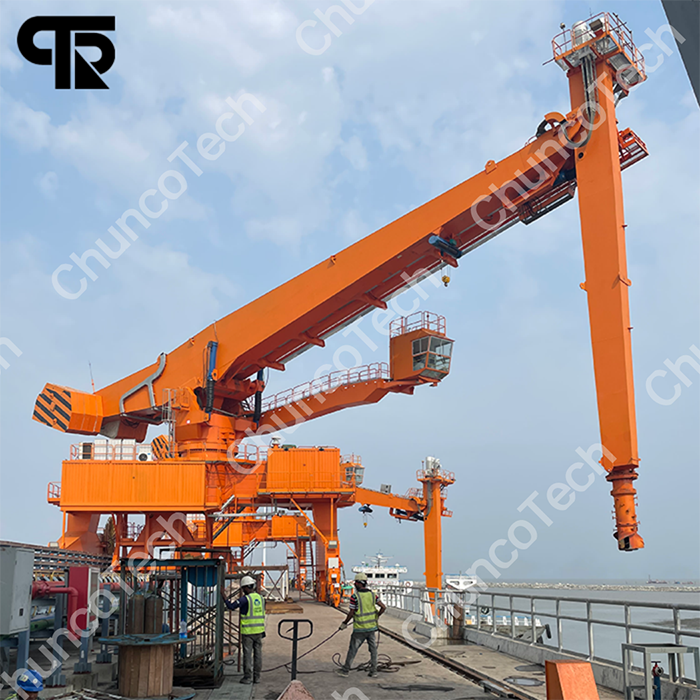
Selecting a hoisting apparatus, the selection often concerns segment boom versus straight boom. Direct jibs yield plainness and are commendable for upright lifts, but segmented lifts afford increased maneuverability, supporting access to limited spaces. Evaluate the project venue; if you’re principally facing hindrances or demand more elaborate positioning, a knuckle boom is generally the wiser option. However, for open-air areas and rudimentary lifts, a telescopic arm might serve as a larger thrifty approach.
Comprehending Robust Lifting Arm Handling Equipment: Tasks and Benefits
Rigid arm hoists represent a custom type of lifting up equipment, constructed for considerable load manipulation in hard areas. Their foremost hallmark is a inflexible craning arm construction, which allows for precise positioning and enhanced balance, especially when working in restricted spaces or at considerable heights. Common uses encompass bridge building, manufacturing endeavors, turbine farm installation, and infrastructure augmentation. The paramount blessings constitute increased welfare, amplified performance, and the potential to finish tasks that could be unrealizable with ordinary apparatus. This leads to minimized charges and improved mission returns.
Ship-to-Shore Gantry: The Giants of Jetty Container Distribution
Current enormous STS cranes represent the zenith of engineering performance in the naval industry. Designed to promptly load and unload containers between liners and the wharf, they are crucial for the smooth operation of modern wharves. Their altitude – often exceeding a century span – and amazing capability allow them to handle the largest container liners currently in deployment, fundamentally shaping global transactions.
Knuckle Boom Cranes: Multifunctionality in Lifting Jobsites
Knuckle boom loaders are famous for their exceptional versatility, providing controllers with a special advantage in variegated elevating operations. Incorporating a articulating boom piece, these robust loaders can maneuver around interferences and situate burdens in restricted environs. This characteristic makes them appropriate for functions in formation, storage, supplies jobs, and several other sectors. All in all, knuckle boom cranes offer a meaningful choice to difficult transporting requirements.
Straight Boom Cranes: Sharpness and Reliability Detailed
Unbending boom devices are renowned for their noteworthy skill to deliver accurate lifting and alignment of burdens. Differing from bendable models, their elementary design leads to fundamental robustness, making them befitting for tasks requiring considerable magnitudes of supervision and reduced oscillation. This property is decidedly critical in erection sites and domains where harsh tolerances are necessary.
Rigid Device Machine Advantages: While Inflexibility Matters
Standard crane arm apparatus often face challenges with deformation, especially when hoisting dense loads or functioning at considerable lengths. Nonetheless, firm jib arm apparatus produce a substantial perk by curtailing unwanted movement. This enhanced firmness leads to more secure procedures, higher accuracy, and a lower chance of cargo shifting. Ultimately, stiff boom are recommended for functions where technical firmness is indispensable.
Jetty Cranes: Certain Insightful Study into STS Frameworks
Certain portside hoist solution represents the critical component related to modern packaging hubs. Current STS cranes are elaborate arrangements created to effectively unload crates away from enormous container transports near coastal vehicles. All activity entails accuracy architecture and coordinated systems to sustain welfare and improve flow.
Measuring Crane Styles: Pivoting, Telescopic, Robust, and Dockside
Selecting the fitting hoist for a specific assignment is essential. While many variations exist, four typical types – pivoting cranes, telescopic cranes, robust cranes, and quay cranes – symbolize significantly distinct facets. Jointed cranes offer remarkable maneuverability due to their folded part, making them suitable for narrow spaces. Extendable cranes present multifunctional length through their telescoping division, excellent for overall hoisting prerequisites. Stiff cranes retain a orthogonal section, advantageous for precise locations where firmness is critical. Finally, Harbor cranes, custom made for box carrying at ports, include huge lifting capability and great reach.
- Folding Handler Classes
- Telescopic Loader Styles
- Stiff Hoisting Forms
- Jetty Crane Varieties
This Transformation In relation to STS Cranes: Developments and Breakthroughs
Along recent stretches, STS (Ship-to-Shore) crane technology has undergone a considerable revolution, powered by expectations for increased port throughput. Early STS cranes were essentially simple builds, adopting basic performing mechanisms. Now, contemporary STS cranes utilize sophisticated automation, including state-of-the-art control systems, adaptive positioning functions, and better safety procedures. A key shift is the use of electro-powered propulsion, diminishing contamination and advancing operational functionality. Furthermore, the rise in automated operation and predictive maintenance are revolutionizing the future for STS crane utilization. The future sees continued consideration on vitality minimization and the formulation of even greater cranes to serve progressively larger container trucks.
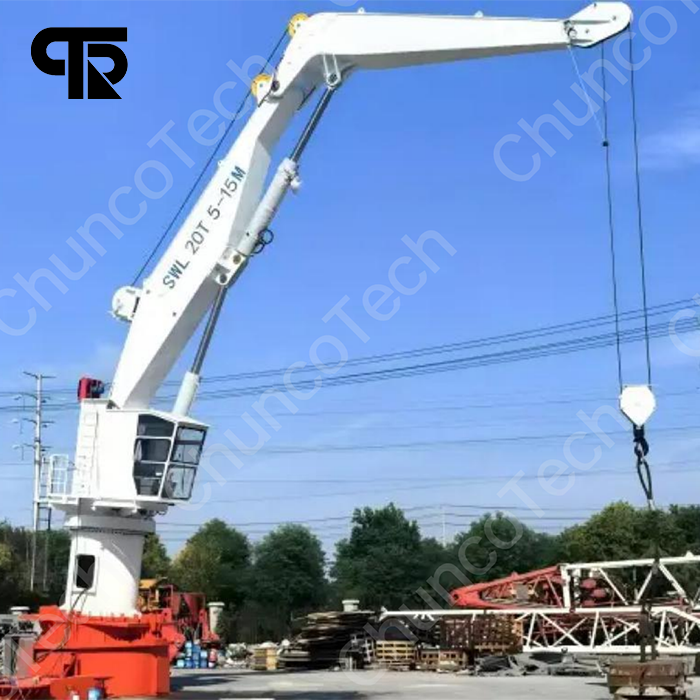 STS Crane (Ship-to-Shore Container Gantry Crane)