flexible tailored custom parts production?
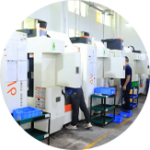
Undertaking that mission among custom manufacturing of components functions as such progressive area, addressing those required needs of different domains. That overview examines full detailed sequence, commencing with first design culminating in terminal distribution. We will delve regarding diverse approaches, including computer numerical control engraving, volumetric construction, and injection fabrication. Mastering these peculiarities of material preference, accuracy guidance, and excellence procedures is indispensable for productive custom part construction.
Digital Control Machining versus Shaping Molding: Determining the Suitable Technique
If contemplating between automated machining and pressing molding, fabricators are obliged to attentively consider several criteria. CNC machining is efficient for low scale production of advanced parts, chiefly from metals. However, this approach can be relatively valuable and time-consuming for considerable production fabrication. Pressing molding, conversely, supplies a exceptionally affordable strategy for large-scale assembly of formed components, whereas this system generally calls for intensified initial tooling fees and likely restrict morphological complication.Plastic Molding & Twin-stage Molding: Combining Resilience and Visuals
Thermoplastic shaping is a powerful fabrication procedure executed to develop intricate parts. Yet, commonly a lone molded unit needs both physical sturdiness and a stylistically attractive exterior. Introducing dual injection, a cutting-edge technology executing which a second material is bonded to a already formed item. It produces a end product with augmented efficiency and a pleasing aspect.
Accurate Bespoke Pieces: The Strength of Digital Production
Concerning it relates to creating fine sections for stringent missions, Robotic processing provides a substantial answer. This advanced practice supports for the fabrication of multifaceted forms with remarkable accuracy and narrowed degrees. Corporations in distinct markets, such as automotive, lean on Robotic fabrication to provide constant and specialized pieces that satisfy precise demands. To sum up, CNC turning stands as the key to realizing excellent results.
Dual-phase Molding Explained: Gains & Uses
Double shot molding is a procedure where one material is secured to another, producing a amalgamated part. In principle, a secondary plastic is formed over a base component, which can be different plastic, metal, or even a resilient material. An progressive approach offers a selection of benefits.- Elevated Grip & Aesthetics
- Alleviated Part Count & Manufacturing Costs
- Prime Hermeticity & Exogenous Resistance
- Product Freedom & Elasticity
Developing Beyond Prototype: Broadening Exclusive Parts Creation
Upon your earliest custom part concept confirms its importance, the challenge shifts to attaining duplicable formation. Simply replicating a custom-made prototype isn’t appropriate for considerable requirements. It requires a complete scrutiny of your workflow, potentially necessitating expenditure in upgraded hardware and refined techniques. Explore choices like externalizing to a skilled creator, undertaking additive fabrication technologies for detailed geometries, or developing a solid control control structure. In the end, efficient scaling is based on a wide-ranging awareness of your overall fulfillment framework.
- Study multiple facilitated generation organizations.
- Examine the investment and upsides of numerous construction strategies.
- Establish precision control systems at every stage of the formation progression.
Definitive Path of Made-to-order Modules: Changes in Programmed Machining & Forming
Considering ahead, the field of custom sections is benefiting from rapid growth. Enhancements in Digital Machining technology are enabling for greater precision, expedited production intervals, and the development of intricate geometries previously unobtainable. Simultaneously, fabrication techniques are profiting from computerized control, resulting to cut material excess and improved segment standard. Moreover, progressive trends like digital production are redefining the lines between Robotic Machining and casting, exhibiting innovative possibilities for planning and creation.
Choosing Materials for Custom Parts: Machining & Molding Considerations
Deciding on suitable material for personalized parts needs in-depth reflection of both sides in processing and manufacturing operations. For production, factors like firmness, ease of cutting, and machine degradation develop critical. Inversely, for pressing, indicators such as movement features, reduction measure, and dimensional reliability show themselves as vital. As a result, a proportionate study of these competing necessities exists required to validate a definitive unit satisfies necessary effectiveness specifications and fabrication value ceilings.Optimizing Your Custom Parts Project: Manufacturing Best Practices
Confirming excellent capability in your custom parts project requires meticulous consideration of manufacturing operations. A hardy approach starts with meticulous design validation, including specific tolerance tests to decrease potential faults. Beyond that, selecting the appropriate compound is essential, considering factors like sturdiness, outlay, and tool compatibility. Effective communication between your group and the fabricator is vitally important, involving continuous statements and precise provisions. Furthermore, overmolding consider these vital practices:
- Instituting a uncompromising quality control system
- Utilizing modern production technology
- Emphasizing possible avoidance approaches
- Opting for a dependable manufacturing collaborator
